Trenchless technology has revolutionized underground utility installation, offering significant advantages over traditional open-cut methods. Understanding the various trenchless pipe installation methods helps project owners and contractors select the most appropriate technique for their specific applications.
What is Trenchless Technology?
Trenchless technology encompasses methods for installing, replacing, or renewing underground infrastructure with minimal surface disruption. These techniques eliminate or reduce the need for extensive excavation, preserving surface features, minimizing traffic disruption, and reducing environmental impact.
Key Benefits of Trenchless Installation
- Minimal surface disruption and restoration costs
- Reduced project duration compared to open-cut methods
- Lower environmental impact
- Ability to cross obstacles (roads, rivers, buildings)
- Reduced traffic and business disruption
- Often more cost-effective than traditional trenching
Common Applications
- Sewer and water line installation
- Gas and petroleum pipelines
- Electrical and telecommunications conduit
- Storm drainage systems
- Industrial process piping
- Railroad and highway crossings
Major Trenchless Installation Methods
1. Auger Boring
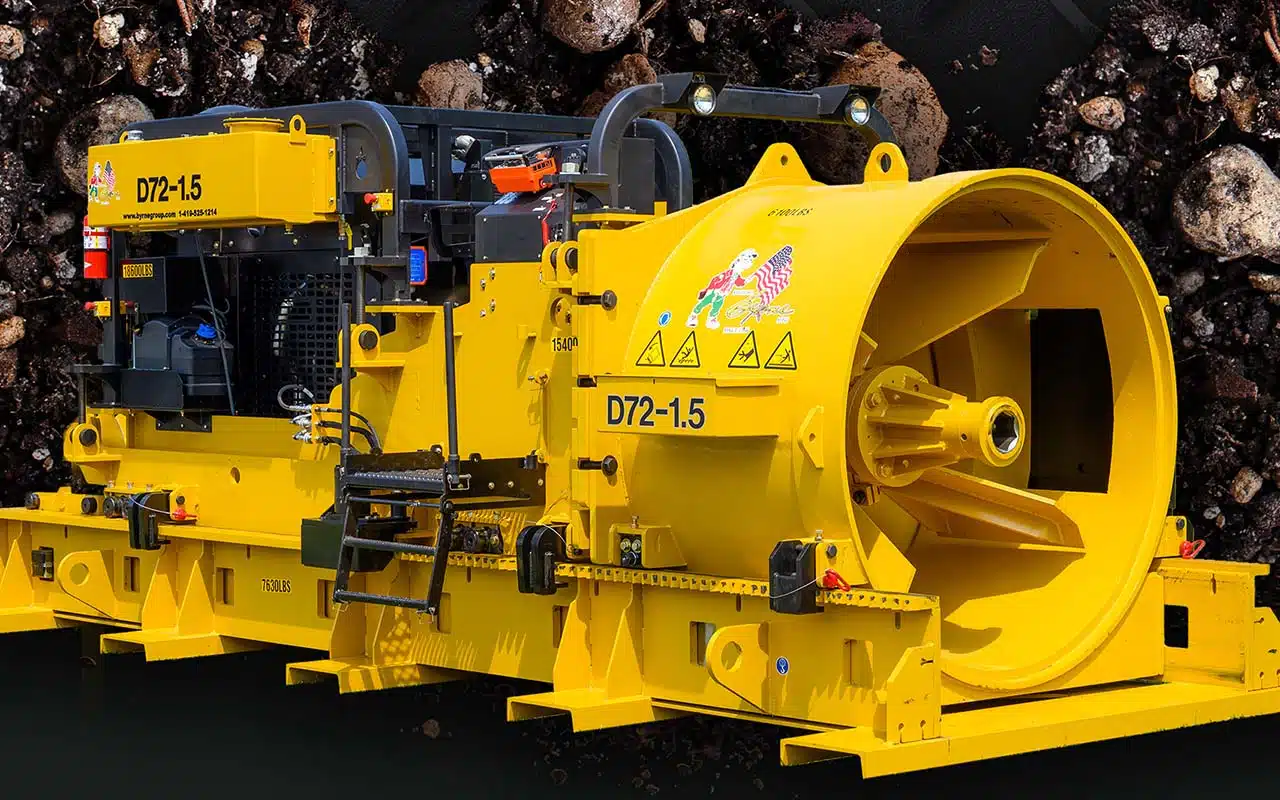
Auger boring uses a rotating cutting head attached to hollow auger flights to simultaneously excavate and remove soil while installing casing pipe.
How It Works:
- A jacking frame pushes the auger boring machine and casing pipe forward
- The rotating cutting head excavates soil
- Auger flights convey spoil back to the entry pit
- Steel casing follows directly behind the machine
- Laser or electronic guidance maintains line and grade
Best Applications:
- Gravity sewer and drainage installations
- Utility crossings under roads and railways
- Installations in stable to moderately unstable soils
- Projects requiring 12″ to 96″ diameter casings
- Distances up to 600 feet
Advantages: Relatively simple and proven technology; lower equipment costs than other methods; effective in various soil conditions; good for maintaining grade on gravity lines; minimal ground disturbance.
Limitations: Length limited by auger torque transmission; not suitable for very soft or fluid soils; steering capability limited compared to HDD; requires adequate space for entry and exit pits.
Typical Costs: Equipment 200,000–400,000; installation 150–400 per linear foot. Best value for straight, grade-controlled installations.
2. Pipe Jacking (Jack and Bore)
Pipe jacking advances pipes through the ground using hydraulic jacks while excavating soil from within the pipe.
How It Works:
- Hydraulic jacking frame pushes pipe sections forward
- Excavation occurs at the face (manual, mechanical, or slurry)
- Spoil removed through the pipe or slurry circuit
- Additional pipe sections added as bore advances
- Lubrication reduces friction during advancement
Best Applications: Larger diameter installations (36″ to 120″+); longer drives (up to 1,000+ feet); installations requiring high accuracy; projects in urban areas; gravity sewer systems.
Excavation Methods:
Hand Mining — Worker excavates at the face. Maximum control and flexibility, limited to stable ground, smaller diameters (36″–72″). Slower but versatile.
Mechanical Excavation — Cutting head or shield excavates. Higher production rates, suitable for larger diameters and varied soil, more economical for longer drives.
Slurry Method — Excavated material mixed with slurry and pumped to the surface for separation. Continuous operation, effective in unstable soils, higher equipment investment.
Advantages: Suitable for large diameters; high installation accuracy; long drive capability; adaptable to soil conditions; installed pipe is permanent casing.
Limitations: Requires substantial pit construction; higher mobilization costs; more complex than auger boring; requires skilled operators.
Typical Costs: Equipment 300,000–1,000,000+; installation 300–800 per linear foot. Most economical for larger diameters and longer runs.
3. Microtunneling
Microtunneling is a highly sophisticated remotely controlled pipe jacking method using a microtunnel boring machine (MTBM).
How It Works: Computer-controlled MTBM excavates and steers; laser guidance for precision; slurry or auger system removes spoil; jacking frame advances pipe sections; real-time monitoring and adjustment.
Best Applications: High-precision installations; tight tolerance requirements (±1 inch typical); difficult soil conditions; long drives in urban areas; installations below groundwater.
Advantages: Highest accuracy of trenchless methods; suitable for challenging soil; remote operation for safety; long drive capability (2,000+ feet possible); minimal settlement risk; no workers at the face.
Limitations: Highest equipment and mobilization costs; requires specialized operators; significant support equipment; minimum diameter typically 24″; complex setup and logistics.
Typical Costs: Equipment 1,000,000–3,000,000+; installation 500–1,500 per linear foot. Justified by accuracy requirements and difficult conditions.
4. Horizontal Directional Drilling (HDD)
HDD drills a pilot bore, enlarges it, then pulls utility pipe through the completed bore path.
How It Works: Drill rig advances pilot bore along designed path; downhole steering tool allows curved drilling; pilot bore reamed to required diameter; utility pipe pulled back through reamed bore; drilling fluid stabilizes bore and removes cuttings.
Best Applications: River and road crossings; environmentally sensitive areas; installations not requiring rigid pipe; longer crossings (up to several thousand feet); curved or undulating alignments; avoiding obstacles.
Advantages: Can follow curved paths; minimal surface disruption; very long drive capabilities; quick installation; effective for obstacle avoidance; wide range of diameters.
Limitations: Not suitable for gravity systems (no grade control); requires compatible pipe materials (fusible, flexible); risk of inadvertent drilling fluid returns; geology dependent; cannot install rigid steel casing.
Typical Costs: Equipment 300,000–1,500,000; installation 50–300 per linear foot. Very economical for long crossings.
Method Comparison: When to Use Each
Auger Boring: Straight gravity lines; moderate lengths (<600 feet); road/railroad crossings; standard soil conditions; budget-conscious projects.
Pipe Jacking: Large diameter requirements; high accuracy needed; longer drives; urban installations; permanent steel casing required.
Microtunneling: Tight tolerance requirements; difficult soil conditions; below water table; long drives requiring accuracy; mission-critical installations.
Horizontal Directional Drilling: River/waterway crossings; long distance installations; curved alignment requirements; pressure pipe systems; minimal disruption priority.
Equipment Requirements by Method
Auger Boring: Boring machine, jacking frame, laser guidance, pit support, spoil handling.
Pipe Jacking: Jacking frame and power pack, shield or cutting head, spoil removal system, guidance system, pipe handling equipment, lubrication system.
Microtunneling: Microtunnel boring machine, slurry separation plant, jacking system, control cabin, guidance systems, extensive support equipment.
HDD: Directional drill rig, mud mixing and recycling, locating equipment, pipe fusion equipment, support vehicles.
Project Planning Considerations
Site Investigation: Soil borings along alignment; utility locating; groundwater assessment; environmental constraints; access requirements.
Method Selection Criteria: Pipe diameter and material; drive length and alignment; accuracy requirements; soil and groundwater conditions; budget constraints; schedule requirements; surface restrictions.
Contractor Capabilities: Equipment availability; crew experience; track record; support resources; safety programs.
Getting Expert Guidance
Selecting the appropriate trenchless method requires careful analysis of project requirements and site conditions. Since 1966, Byrne Group has manufactured auger boring equipment and supported countless trenchless installations.
Our team can help you evaluate project requirements, compare method feasibility, estimate project costs, recommend equipment, and connect with experienced contractors. We also offer used and rental machines for single-project needs.
Contact Byrne Group to discuss your trenchless pipe installation project.